Brother Matt Wooters on Male Loneliness, Mental Health, and Building Community at JCU
JCU: Brother Matt, what inspired you to start Brothers’ Keeper at John Carroll? Was there a specific moment or experience that made you feel this was needed for students on our campus?
Br. Matt: My idea to start this group came from a culmination of my previous role, when I was working with the Jesuits and traveling around the country, giving talks and working with young men at a lot of different places. I had this pretty good temperature check from a really large sample size around the country, and this sense of isolation and loneliness was a very common theme for young men. In my first semester at John Carroll, I got a group of athletes together and said, “Hey, would you be interested in doing a more intentional check-in once in a while, catching up with guys that’s not screen-based and in person?” And 100% of them were like, “Yes, please. We want this. We’re looking for something like this.”
JCU: From your perspective as a Jesuit brother and also as a therapist, what are some of the biggest challenges you think young men are facing today?
Br. Matt: What I’m noticing with the young men that I work with is that there is a fear of being a burden, a fear of asking for help, and a fear of sharing the good stuff that’s going on. And so they feel very contained. If you can only really talk to your girlfriend, or your mom, or your dad, that is a very limited way of proceeding. Young men experience social pressures of not wanting to seek too much attention, or be cringey, or be a burden on others. This internalized sense of being a burden makes them feel like their problems are solely their own, rather than bonding over, like, “Oh, I’m experiencing that too.” Isolation and loneliness stem from that.
JCU: The term male loneliness is showing up more in national conversations. How does this reality show up in the lives of students you work with?
Br. Matt: I don’t think boys are given permission to have a full spectrum of emotions. I think there are some socially acceptable emotions that they are allowed to show on the internet or with their friend group and anything beyond that is seen as being effeminate. It can be wrongly interpreted as being needy and feminized, but emotions don’t have gender. We all have all the same emotions. I think girls, in some cases, are given more permission to have a full spectrum of emotional display, and boys from a very young age are taught that that’s not the case for them.
JCU: What does Brothers Keeper actually look like in practice? If a student walked into a meeting for the first time, what would they experience?
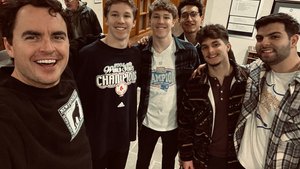
Br. Matt: It’s intentionally low-pressure. There’s food, usually pizza. And we sit in a circle. There’s no podium. There’s no stage. There’s no performance. I’ll usually start with a check-in question. Sometimes it’s light, like, “What was the best part of your week?” Sometimes it’s deeper, like, “Where did you notice yourself wearing a mask this week?” And what’s really cool is that the guys answer honestly. And once one guy goes there, it kind of gives permission for the next guy to go there. There’s no fixing. There’s no advice-giving unless someone explicitly asks for it. It’s more just listening. It’s just practicing being present with each other. And I think for a lot of them, that’s new. To sit in a room where you’re not competing, you’re not posturing, you’re not trying to impress anybody. You’re just there as your fully self.
JCU: Have you seen changes in the students who consistently participate?
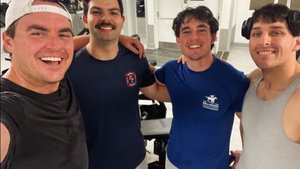
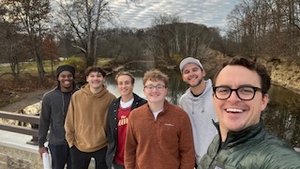
Br. Matt: Yes, the biggest thing is they start reaching out to each other outside of the group. That’s when I know it’s working. They’ll say, “Hey, a couple of us grabbed coffee,” or “We went to the gym together,” or “We checked in after that hard exam.” It moves from being this structured thing to being more organic. And that’s kind of the goal. I don’t want them dependent on me. I want them connected to each other. I’ve had students say, “I’ve never had friendships like this before.” And that’s huge. That’s not something they were necessarily missing socially. They had friends, but they didn’t always have depth. So seeing depth form, that’s the win. Authenticity breeds authenticity. When we experience spaces where we can be real, that is attractive, we want more of that.
JCU: How does your Jesuit identity shape the way you approach this work?
Br. Matt: Being a Jesuit brother means I’m really attentive to the whole person. Cura personalis, or care for the whole person, that’s not just a slogan. It’s not just, “How are your grades?” It’s, “How’s your sleep? How’s your prayer life? How are your friendships?” The Jesuit tradition gives a lot of room for reflection. For examining. For noticing where God is moving in your life. And that doesn’t have to be overly pious or overly churchy. It can just be paying attention.That attentiveness is something young men are hungry for, even if they don’t have language for it yet.
JCU: What would you say to a student who is struggling but feels hesitant to join Brothers’ Keeper or a similar group?
Br. Matt: You don’t have to have it all figured out. You don’t have to be in crisis. You don’t have to be “bad enough” to deserve support. You can just show up. You can listen the first few times. Nobody’s going to force you to talk. If you’re feeling alone, you are not the only one feeling that way. I can guarantee it.
JCU: Do you think this is something other colleges could replicate, or other communities outside of higher education? And what do you think the value would be for them?
Br. Matt: Totally. I think this is super repeatable, and like I said before, it’s not rocket science. In some ways it is quite simple and the most human thing possible: sharing food and sharing ourselves.How do we gather in-person to create a community of care? Where are the communities of care in people’s lives? Because this is not just for young men, but there’s increased isolation for all of us, right? There’s increased isolation, there’s increased scrolling, there’s increased physical distance or less opportunity of being with your friends or family on the weekends. So how do we create community where we can gather and be ourselves and put our phones down, share a meal, and check in about our lives? We are wired for community. Since the time of the cavemen we have gathered around fire, shared a meal and told each other stories. That’s kind of the secret sauce here- doing the most natural thing in the world.