Sr. Katherine Feely, SND
Director of CSSA
Background
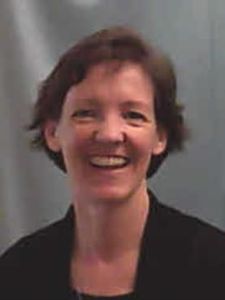
Dr. Katherine Feely, SND serves as the Director of the Center for Service-Learning and Social Action. She leads initiatives that connect the curriculum to the community and are designed to foster community-based learning, support faculty innovation, cultivate civic leadership and foster active community engagement.
Prior to coming to John Carroll, Sr. Katherine worked in Washington D.C. at the Jesuit economic research center and think tank, the Center of Concern, founded by Pedro Arrupe, S.J. and Cardinal Bernadin. She was involved in national and international economic policy analysis and helped launch the Education for Justice project. She has served on advisory committees with the U.S. Catholic Bishops, the National Catholic Education Association, Catholic Relief Services, and the Association of Catholic Colleges and Universities. She has served as the director of the Center since August 2014.
Areas of Expertise
- Dr. Katherine Feely is a nationally recognized leader in civic and community engagement in higher education. With interdisciplinary training spanning higher education leadership and policy (Ed.D
- University of Pennsylvania)
- theology with a focus on social ethics and economics (MA
- Boston College)
- and accounting and economics (BS
- Villanova University)
- her expertise bridges educational leadership
- faith-based social ethics
- and community development. She has led the design and implementation of comprehensive
- institution-wide civic engagement strategies grounded in anti-racist
- asset-based approaches that center community knowledge
- agency
- and partnership. Under her leadership
- the Center has become a hub for high-impact practices
- launching faculty
- student
- and experiential learning initiatives that integrate democratic engagement
- advocacy
- and academic excellence.
Research Interests
University-community partnerships: A case study of institutional models of strategic engagement and cross-sector collaboration. 2020.Doctoral dissertation, University of Pennsylvania.The purpose of this study was to explore the catalysts, challenges, and configurations of institutional level university–community partnerships in three Jesuit higher education institutions. Using a case study design, the research approach included semi-structured interviews, document review, and observation to examine the ways community partnerships were initiated and structured in response to community issues. The findings of this study suggest that 1). In responding to catalysts in the community, new organizational structures were necessary within a university in order to respond to new needs and engage the community in new ways. 2). University-community partnerships created new networks of relationships within universities and outside of them. Leveraging these relationships, may address overcome the limitations of siloed or disconnected efforts leading to more effective and integrated institutional engagement. 3). Greater attention should be given to strategic institutional cross-sector collaborations that are necessary if partnerships are intended to bring about social change. Each university in the study demonstrated engagement in cross-sector networked partnerships that resulted in more intentional, institutional, and strategic engagement. More strategic and integrated approaches to community engagement offers a crucial way to address the striking challenges of these times and leverage the innovation, creativity, knowledge, and collaborative networks required to address the challenges of the day at the scale at which they exist.
Education
University of Pennsylvania, Philadelphia, PA
Doctor of Education, Higher Education Management
Boston College, Chestnut Hill, MA
Masters of Arts in Theology: Concentration: Social Ethics and Economics
Villanova University, Villanova, PA
Bachelors of Science in Accounting and Economics
Courses Taught
Conferences, Workshops & Symposia Presented, Designed and Convened:- Conference presentation: “Productive Tensions & Uncomfortable Conversations” (2022, University of Pittsburgh, Diversity Forum and Place-Based Justice Network Conference.) An interactive presentation exploring the challenges within the civic engagement field and the conversations needed to move our institutions and the field forward.
- Conference presentation: “Strengthening Advocacy, Dialogue, and Structural Analysis Skills Through Summer Internships.” (2021 Ohio Campus Compact.).
- Webinar: “From Data Collection to Stories of Impact: Annual Reporting and Data Analysis”. (2020 GivePulse Higher Education Users Group).
- Symposium: “The Spirituality of Global Solidarity” (2006 – Washington, DC) This convening hosted high school teachers from around the country to explore this topic and develop new resources in the context of the conference to meet the needs of this group.
- Service Learning Symposium: “Critical Connections: Integrating Service Learning & Catholic Social Teaching” This was an invitational convening of 80 of high school teachers and campus ministers from around the country to share best practices, learn together and identify needs going forward.(2007 – Catholic University of America)
- Colloquium: “Transforming the Heart: A Colloquium on Education in Catholic Social Teaching for the Next Decade” This colloquium was research based and convened national experts in a variety of relevant fields. Participants sought to explore new directions in promoting transformative learning processes in Catholic Social Teaching instruction. (2008 - USCCB)
- Webinar: “Great Models, Methods and Tools for Service Learning: Helping Students Think Deeply about Service Learning.” A collaborative with the NCEA Secondary Ed Department and CRS. (2009 – Online Webinar)
- Webinar: “Integrating Catholic Social Teaching Across the Curriculum” This webinar was an invitational online event for Catholic high schools across the country.(In several cases entire departments or curriculum committees attended virtually) The content presented highlighted current research, offered tools and examples, highlighted new materials developed by EFJ to integrate CST across the curriculum and address the new USCCB “Framework for Adolescent Catechesis.” (2010 – Online Webinar)
- Webinar: “Theological Reflections and Underpinnings for Care of Creation” (2010 – Online Webinar)
Publications
- Book: “Engaging Faith in the World: Catholic Social Teaching and Global Solidarity,” 2006. Published by NCEA.
- Book: “Not On Our Watch: Catholic Companion and Book Discussion Guide” (on CST and Genocide in Darfur. 2009. Published by Enough Campaign.