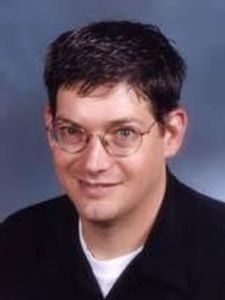
Christopher Sheil, Ph.D.
Professor
Areas of Expertise
I am a Herpetologist (one who studies amphibians & reptiles), with primary interests in anatomy and evolution and development. Most of my research focuses on the evolution of anatomical structures, that can be understood through studies of development. This means that I look at lots of embryos and larvae to view explore the anatomy of turtles, frogs, lizards, and snakes.
I am broadly trained in systematics and taxonomy, and I really enjoy all that we have learned about the tree of life, evolution of all groups of living things (plants, animals, fungus, etc), and what we know about their origins through deep time.
I am also a Scientific Illustrator, and I have a deep appreciation for the role that illustration plays in communicating science to a broad audience, not just to my research peers. I support any efforts to promote STEAM (Science Technology Engineering ARTS and Math).
Research Interests
My research focuses on developmental morphology and anatomy of the skeletal system in amphibians and reptiles. For example, how have the hands and feet of turtles come to be so different from those of other reptiles? How has the skull of a turtle or a frog come to be so different from other reptiles or amphibians. I am broadly interested in changes in patterns of development that lead to these major changes.
Recently, I have also been interested in disseminating information on how various aspects of biodiversity can be taught in intro-level courses, and have worked with colleagues to explore laboratory assignments that can teach skills in systematics and bioinformatics.
Education
B.Sc. in Systematics and Ecology, The University of Kansas, Lawrence, KS.
Intensive Spanish Curriculum, La Universidad del Pacifico, Asunción, Paraguay.
Ph.D. in Ecology & Evolutionary Biology, The University of Kansas, Lawrence, KS.
Courses Taught
BL1600 (Principles of Biology 2: Animal and Plant Anatomy and Physiology). This is an introductory majors-level biology course that serves as a springboard for students as they launch into our various biology majors (Cell & Molecular Biology, Environmental Science, or Biology).BL1700 & 1705 (Principles of Biology 3: Evolution & Diversity). This is an introductory majors-level lecture/lab combo that introduces students to the tree of life (from bacteria to vertebrates), evolution and species concepts, the geological record, and global climate change.
BL4260/4265 and BL5260/5265 (Biology of the Reptilia): This is a lecture/lab course that is taken by undergraduates and graduate students. It introduces students to the origin, anatomy/physiology, ecology, and evolution of reptiles. Students learn about all species of reptiles in Ohio, and the families of reptiles from the world. The course typically involves some sort of weekend or end-of-the-semester field trip, which does not have a program fee.
BL4150 (Introduction to Systematics): This explores the processes behind Identification, naming, description, classification, and organization of biological diversity. We learn a lot about species concepts, how they are implemented, and how his relates to the philosophy and practice of reconstructing evolutionary history.
BL4050 (Scientific Illustration): Experience in art not required. Develops skills of observation in biological sciences and teaches how to make publication-quality illustrations for science communication and dissemination of research results. Students begin to develop a comprehensive portfolio showcasing various techniques and graphic styles. An additional fee is required for personal illustration materials.
BL1370 (Climate Change: Global Impacts): This is a non-majors course that is offered as a LINKED course with EN2635 (Climate Change Literature), to explore the science behind climate change, and the impacts it has on society, regionally and globally.
Publications
Sheil CA, Martin MP, Yaussy N, and Johansen JR, 2025. Identify unknown blue-green algae with traditional techniques and DNA sequence data. Advances in Biology Laboratory Education 45(19):1–24.
Martin MP, Sobonya M and Sheil CA. 2024. Using DNA barcoding to examine mislabeling in tuna. 2024 Advances in Biology Laboratory Education 44(33):1–17.