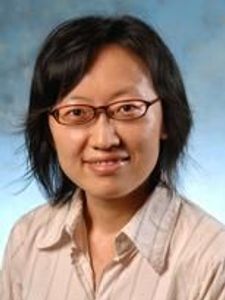
Yi Shang
Associate Professor/Chair
Background
My perspective is rooted in diverse experiences, having spent my formative years in Beijing and Boston. My academic path reflects a similar variety, leading me to pursue degrees in literature, psychology, statistics, and education. In an age that values specialists, I have nurtured in myself, for better or for worse, a generalist, eager to connect ideas wherever I find them. Away from campus, I love exploring the world through travel, wildlife observation, and reading history, which helps me appreciate the complexity and interconnectedness of everything we study. Ultimately, this leads to my central focus: What is intelligence (natural or artificial), and how do we learn and grow? My biggest goal as an educator is to share the joy of discovery, working alongside students in education and other disciplines to foster a lasting enthusiasm for knowledge and learning.Areas of Expertise
- Quantitative methodology in educational research: Teacher evaluation; meta analysis; making causal inference with observational data
- Research in statistics education
Research Interests
Over the years, my research interests have evolved. As a junior faculty member, I studied quantitative teacher evaluation. Specifically, I devised methods to correct for measurement error-induced bias in teacher evaluation, and co-authored a software package that is still being used in more than a dozen states’ teacher evaluation systems.
My current research interest is inspired by my passion for teaching. A chronic challenge in teaching college-level statistics/data courses is: how do I engage students who lack self-efficacy in math? I am researching ways to teach statistics with stories, namely stories of how data analysis methods are applied to solve real world problems, as well as stories from the history of statistics which explain the rationales behind statistical methods.
Education
- Ph.D. Educational Research, Measurement, and Evaluation, Boston College
- M.A. Statistics, Boston University
- M.A. Counseling Psychology, Boston College
- B.A. English Language and Literature, Beijing (Peking) University, Beijing, China
Courses Taught
- Research Methods
- Tests and Measurements
- Statistics, Data Science
- Learning, Assessment, and Individual Differences
- Human and Artificial Intelligence
- Human Memory and Cognition
Publications
Bus, A. G., Shang, Y., & Roskos, K. (2024). Building a Stronger Case for Independent Reading at School. AERA Open, 10. https://doi.org/10.1177/23328584241267843
Shang, Y., VanIwaarden, A., & Betebenner, D. W. (2015). Covariate measurement error correction for Student Growth Percentiles using the SIMEX method. Educational Measurement: Issues and Practice, 34(1), 4-15.
Roskos, K., Burstein, K., Shang, Y., & Gray, E. (2013). Young children’s engagement with e-books at school: Does device matter? Sage Open. DOI: 10.1177/2158244013517244
Shang, Y. (2012). Measurement error adjustment using the SIMEX method: An application to student growth percentiles. Journal of Educational Measurement, 49(4), 446-465.