Zeki Saritoprak, Ph.D.
Professor; Bediuzzaman Said Nursi Chair in Islamic Studies
Background
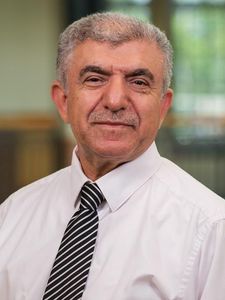
Dr. Zeki Saritoprak is a Professor in the Department of Theology and Religious Studies and Director of the Bediuzzaman Said Nursi Chair in Islamic Studies, at John Carroll University.
A native of Turkey he has spent more than thirty years studying Islamic theology and mysticism. He is the author of many works on Islam, spirituality, and interfaith dialogue. Dr. Saritoprak received his Ph.D. in Islamic Theology from the University of Marmara in Turkey and has authored more than fifty academic articles and encyclopedia entries, in addition to his published books. In addition to his teaching at John Carroll, Dr. Saritoprak also taught at Berry College in Georgia and was a research fellow Georgetown University and the Catholic University of America.
Dr. Saritoprak is also active in interfaith dialogue and is a member of the National Catholic Muslim Dialogue sponsored by the US Conference of Catholic Bishops and is the cofounder of the Catholic and Muslims Scholars in Dialogue group.
Dr Saritoprak is a highly sought-after speaker and frequently gives talks on a variety of subjects related to Islam, including: Jesus in Islam, contemporary Islamic thought, Islamic Spirituality, Sufism, and Islam's contribution to interfaith dialogue.
More information on Dr. Saritoprak can be found at zekisarioprak.com
Areas of Expertise
Islamic Theology; Islamic eschatology; Islamic spiritualty; mysticism and Sufism; Nursi Studies; Interfaith Dialogue
Research Interests
Dr Saritoprak is currently working on three main research projects. First is near completion on a book on Islamic Eschatology. Second is a work of translations and commentaries on selections from the main sources of Hadith literature. Third is a new translation and contemporary commentary on the Qur'an.
Education
Ph.D., University of Marmara, Turkey
Courses Taught
TRS2430: INTRODUCTION TO ISLAM
TRS3402 LINK: THE ENVIRONMENT IN WORLD RELIGIONS
TRS3441 ISLAM IN AMERICA
TRS3442 ISLAM AND THE ENVIRONMENT
TRS3444/5444 ISLAMIC SPIRITUALITY
TRS3445/5445 THE QUR'AN
TRS3499 Islam vs. Terrorism: Exploration of Historical and Contemporary Perspectives
Publications
Books
· Islamic Spirituality: Theology and Practice for the Modern World (New York: Bloomsbury Academic, 2017)
· Islam’s Jesus (Gainesville: University Press of Florida, 2014)
· Critical Edition of al-Sarakhsi’s (d.1100 CE) Sifat Ashrat al-Sa’a (The Description of the Portents of the Hour). (Cairo: Dar al-Kalimah al-Tayyibah, 1993) (Arabic).
· Islâm ve Diger Dinlere Göre Deccal (Al-Dajjal in According to Islam and other Religions) (Istanbul: Yeni Asya, 1992) (Turkish).
· Sahabîler Ansiklopedisi (Encyclopedia of the Companions of the Prophet) (vols. I-II), (Istanbul: Nesil Yayinlari, 1989) (Turkish). [Co-authored]
Book Chapters
· “Peace, Nonviolence, and Islam” Things that Make for Peace: Traversing Text and Tradition in Christianity and Islam (New York: Lexington Books, 2020): 1-13.
· “Dignity: An Islamic Perspective” in Value and Vulnerability: An Interfaith Dialogue on Human Dignity. Matthew Petrusek and Jonathan Rothschild, eds. (Notre Dame, Indiana: Notre Dame University Press, 2020): 227-251.
· “Mary in Islam,” in The Oxford Handbook of Mary, Chris Maunder, ed. (Oxford: Oxford University Press, 2019): 93-103.
· “Afterword” in Michael Louis Fitzgerald, Praise the Name of the Lord: Meditations on the Names of God in the Qur'an and the Bible (Liturgical Press, 2017): 138-46.
· “The Story of Qarun (Korah) in the Qur’an and Its Importance for Our Times” in Poverty and Wealth in Judaism, Christianity, and Islam, Nathan Kollar and Muhammad Shafiq, eds. (New York: Palgrave MacMillan, 2016): 23-30.
· “Migration, Feeling of Belonging to a Land, and the Universality of Islam,” in Islam and Citizenship Education, Ednan Aslan and Marcia Hermansen, eds. (Vienna: Springer VS, 2015): 45-54.
· “The Role of Religion in the Gulen Movement,” in Hizmet Means Service: Perspectives on an Alternative Path Within Islam, Martin E. Marty, ed. (Berkley: University of California Press, 2015): 57-73.
· “Islam,” in World Religions in Dialogue, co-author Rita George-Tvrtkovic, Pim Valkenberg ed. (Winona, MN: Anselm Academic, 2014): 79-132.
· “Muslims’ Perception of Fethullah Gulen and the Hizmet Movement: Accommodating or Hindering Modern Turkey,” in Alternative Islamic Discourses and Religious Authority, Carool Kersten and Susanne Olsson, eds. (London: Ashgate, 2014): 15-30.
· “Dialogue between Muslims and Christians: Qur’anic Guidance, Historical Precedence, and Contemporary Prospects in the United States,” in Can Muslims and Christian Resolve Their Religious and Social Conflicts?: Cases from Africa and the United States. Brian E. Stiltner and Marinus C. Iwuchukwu, eds. (Lewiston: Edwin Mellen, 2013): 243-263.
· “Nursi on Theodicy and the Problem of Evil,” in God, Man and Mortality: The Perspective of Bediüzzaman Said Nursi, Hasan Horkuc and Colin Turner, eds. (Clifton, NJ: Tughra Books: 2013): 133-143.
· “Muslim Reflection,” in Interfaith Just Peacemaking: Jewish, Christian, and Muslim Perspectives on the New Paradigm of Peace and War, ed. Susan Brooks Thistlethwaite, (New York: Palgrave Macmillan, 2012): 43-49.
· “Fethullah Gülen and His Theology of Social Responsibility,” in Mastering Knowledge in Modern Times: Fethullah Gülen As an Islamic Scholar, ed. Ismail Albayrak, (New York: Blue Dome, 2011): 85-96.
· “Reconciliation: An Islamic Theological Approach,” in Reconciliation in Interfaith Perspective: Jewish, Christian and Muslim Voices, Reimund Bieringer and David J. Bolton, eds. (Leuven: Peeters, 2011): 75-92.
· “Fethullah Gulen’s Theology of Peace Building,” in Islam and Peace Building: Gulen Movement Initiatives, John Esposito and Ihsan Yilmaz, eds. (New York: Blue Dome, 2010): 169-87.
· “Said Nursi’s Paradigm of Islamic Non-violence,” in Crescent and Dove: Peace and Conflict Resolution in Islam, Qamar-ul Huda, ed. (United States Institute of Peace: Washington D.C., 2010): 95-106.
· “How Commentators of the Qur’an Define ‘Common Word’,” in A Common Word and the Future of Christian-Muslim Relations, John Borelli, ed. with a foreword by John L. Esposito, (ACMCU Occasional Papers, June 2009): 34-45.
· “Bediüzzaman Said Nursi,” in The Islamic World, Andrew Rippin, ed. (London and New York: Routledge, 2008): 396-402.
· “Fethullah Gülen: A Sufi in his Own Way,” in Turkish Islam and the Secular State: the Gülen Movement, M. Hakan Yavuz and John L. Esposito, eds. (University of Syracuse Press, 2003): 156-169.
· “The Mahdi Question According to Bediüzzaman Said Nursi,” in Third International Symposium on Bediüzzaman Said Nursi (1995): 483-497.
Edited Books and Journals
· Special Issue on Bediüzzaman Said Nursi, Islam and Christian-Muslim Relations, vol. 19, no. 1, January 2008.
· Islam in Contemporary Turkey: The Contributions of Fethullah Gülen, Special Issue of The Muslim World Journal, vol. 95, no. 3, July 2005.
· Fundamentals of Rumi’s Thought: A Mevlevi Sufi Perspective (Sefik Can), (New Jersey: The Light, 2004); second edition, 2005.
Selected Articles
· “The Place of Moses in the Qur'an and Its Significance for a Jewish-Muslim Dialogue.” PaRDeS: Journal of the Association of Jewish Studies 22 (November 2016): 17-29.
· “The Qur’anic Perspective on Immigrants: Prophet Muhammad’s Migration and Its Implications in Our Modern Society” Journal of Scriptural Reasoning 10.1 (2011).
· “Revisiting Islamic Eschatology: The Knowledge of ‘The Hour’ and Its Imminence in the Qur’an” Arc: The Journal of the Faculty of Religious Studies McGill University, 39 (2011): 67-78.
· “The Nature and Dignity of the Human Person From an Islamic Theological Perspective” Chicago Studies, 50.1 (Spring 2011): 27-38.
· Editorial, Islam and Christian-Muslim Relations 19.1 (2008): 3-4.
· “Said Nursi on Muslim-Christian Relations Leading to World Peace” Islam and Muslim Christian Relations, 9 (January 2008): 25-38.
· “Islam and Politics in the Light of Said Nursi’s Writings” Islam and Muslim-Christian Relations, 9 (January 2008): 113-127.
· “An Islamic Approach to Peace and Nonviolence,” reprinted in The Houston Catholic Worker July-August 2006.
· “Muslims, Cartoons and the Freedom of Expression,” Zaman (March 2006).
· “Love: The Reason for the Creation of the Universe,” The Fountain 49 (2005): 27-29.
· “The Creation of Evil is not Evil: Nursi’s Theological Approach to the Existence of Evil,” The Fountain 50 (2005) 26-28.
· “Fethullah Gulen and the ‘People of the Book:’ A Voice from Turkey for Interfaith Dialogue,” The Muslim World 95 (July 2005). (Co-authored with Sidney Griffith)
· “An Islamic Approach to Peace and Nonviolence: A Turkish Experience,” The Muslim World 95 (July 2005).
· “The Legend of al-Dajjal (Antichrist): The Personification of Evil in the Islamic Tradition,” The Muslim World 93 (April 2003): 291-307.