This week, Chloé Zhao’s acclaimed film Hamnet became available on Netflix. Dr. Jean Feerick, Professor of English at John Carroll University, is helping audiences better understand the history, literature, and artistic choices behind the adaptation.
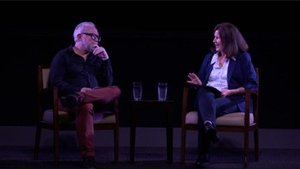
As an early modern literature and Shakespeare scholar, Dr. Feerick recently joined Jim Kearney, Professor of English at the University of California, Santa Barbara (UCSB), for a pre- and post-screening discussion of the film with UCSB students and the general public.
Their conversation explores how Hamnet, and Maggie O'Farrell's bestselling 2020 novel on which the film is based, blends historical fact and imaginative storytelling. Dr. Feerick discusses the limited historical record surrounding Shakespeare and his wife, Anne Hathaway, the ecological themes woven throughout Shakespeare's works, and the visual symbolism Zhao employs to bring those ideas to the screen.
“One of the intentions Maggie O’Farrell had when she set about writing Hamnet was to redress an imbalance in the critical record about Shakespeare and his personal history,” Feerick explains in her discussion with Kearney. “Critics started to turn negative in their portrayals of Anne Hathaway based on very few pieces of historical data and constructed theories about Anne as an unchaste, forward woman who had trapped William Shakespeare into an unhappy marriage. O’Farrell wanted to tell a different story that put Agnes (Anne) and the family in a more centered position. She imagines a relationship that is built on affection and love.”
At John Carroll, Dr. Feerick teaches courses on Shakespeare and early modern literature across all levels of the curriculum. She also coordinates biannual residencies by Actors From The London Stage (AFTLS), bringing professional Shakespeare performances to campus and the Cleveland community.
She is the author of two books and numerous scholarly publications on Shakespeare, race, and early modern ecocriticism. Her current book project seeks to bring an understanding of Shakespeare’s art to a general audience by blending travel memoir, literary analysis, and consideration of our ecological predicament today.
Readers interested in exploring these ideas further can read Dr. Feerick’s corresponding essay, titled “Hamnet's trees: A glimpse of Shakespeare’s ecology for a planet in peril,” published by the Folger Shakespeare Library.