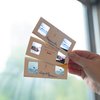
In a collection of 35-millimeter slides stored in the John Carroll University Archives are images of an unlikely research destination: Antarctica.
The photographs document a 1958 Antarctic research expedition led by John Carroll faculty, capturing researchers at work alongside images of penguins, seals, and the Antarctic landscape. For Grace Pierce, Special Collections and University Archivist, discoveries like this are part of what makes archival work so rewarding.
For students, they represent an opportunity to encounter history firsthand.
Following a recent renovation of Archives and Special Collections in Grasselli Library, students and faculty have greater access to original documents, photographs, rare books, and other materials for coursework, research projects, and classroom instruction.
Pierce describes the Archives as the University's institutional memory, preserving records and collections that document John Carroll's history. "We collect items that have historical value to the University, whether they're departmental records, materials donated by alumni, or collections that tell a broader story about John Carroll's past," she says.
Established in 1980, the University Archives preserve the history of John Carroll through more than 40 collections of records, photographs, and other materials. Special Collections also includes rare books and several distinctive collections, including papal medals, the G.K. Chesterton Collection, and the Papers of the American Chemical Society.
While the collections preserve John Carroll’s history, Pierce says their value comes from how students and faculty use them.
"I love that there's always an act of discovery in the archives," Pierce says. "My job is to make that process as accessible as possible. It's rewarding to see students take primary sources, ask new questions, and build something larger than what's on the page."
Students can schedule appointments to work with materials in the Archives and Special Collections for class assignments, independent research, or personal interests. Pierce works with students and faculty to identify collections related to their topics and prepare materials for review.
For Anne Kugler, professor and chair of John Carroll's Department of History, the Archives and Special Collections give students opportunities that extend well beyond the classroom.
"Grasselli Library's Special Collections give our history majors and minors hands-on experience evaluating, curating, and interpreting unique historical sources," Kugler says. "Every year, our students work with primary sources dating back to the 1500s. Those materials help them understand how law, society, politics, and culture have shaped the world we live in today."
A Quiet Beauty
The value of that hands-on experience becomes especially clear when students move from studying primary sources to creating something of their own.
A recent example was the Tim Russert Virtual Exhibit, led by Malia McAndrew, Director of Teaching Innovation and Enrichment and Professor of History at John Carroll. Across three semesters, 50 of her students curated 200 items from the collection of the former Meet the Press host and JCU alumnus, working together to tell a fuller story of his life and legacy.
“Students created a professional-quality resource using historical materials that no one outside the donor’s family had ever seen before,” McAndrew says. “Working in our Archives and Special Collections gave them the chance to practice skills that matter in any profession. They had to sort through a large collection of materials, identify what was most important, evaluate evidence, write a compelling narrative, make difficult decisions, and explain their reasoning to others. They worked as a team, managed a long-term project, and created something for a public audience. Those are the same kinds of skills employers are looking for, and students developed them by doing work they found meaningful.”
As more of our interactions take place on screens, there is something particularly meaningful about encountering an object in person—holding a document, turning the pages of a book, or examining an artifact that has survived for decades or even centuries.
Beginning this fall, faculty will also be able to bring Special Collections into the classroom, putting original documents and artifacts directly into students’ hands. For students in any discipline, that can turn an abstract idea into something they can see, examine, question, and interpret for themselves.
“There is a quiet beauty in leafing through things that have existed for centuries,” Pierce says.