Dr. Richard Martin on Vocation, Ignatian Philosophy, and JCU’s Proposed DNP Program
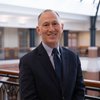
In this installment of John Carroll University’s "In Conversation" series, JCU alumnus Dr. Richard Martin ’83—Associate Professor of Practice in Nursing and Coordinator of the proposed Doctor of Nursing Practice (DNP) program—sits down to discuss returning to his alma mater, how his early undergraduate studies in psychology laid the groundwork for a life in nursing, and how Jesuit values shape whole-person care.
JCU: You’ve returned to John Carroll to coordinate the development of our proposed Doctor of Nursing Practice (DNP) program in the College of Health. What feels most significant to you about coming back to your alma mater for this work?
Richard: Returning to Carroll really feels like coming full circle. I graduated in 1983 with my undergraduate degree in psychology, so this campus is where I first learned how to think critically, embrace curiosity, and discover value in both science and the humanities when trying to understand the human experience. When the opportunity arose to help build graduate nursing education here, I was thrilled. At the time I was a student, John Carroll didn't offer a nursing program and, honestly, I hadn't originally considered nursing as my career path. But the academic and personal foundation I received on this campus completely directed the rest of my professional life. To bring those experiences back to JCU as we design a proposed DNP program intentionally rooted in our mission and Ignatian tradition is an incredible privilege.
JCU: Looking back at your time as an undergraduate in the early 1980s, how did those early days on campus unfold for you?
Richard: It’s actually a funny story. Unlike the experience of my own children, I never travelled to visit colleges and met with counselors or faculty. I walked onto the John Carroll campus late in August to register for classes and ended up in the courses that no one else wanted to take right away—statistics and experimental methods. But that turned out to be a massive blessing in disguise. Taking those rigorous “quant” courses right at the beginning of an undergraduate psychology program gave me wonderful opportunities to become a tutor and teaching assistant, building close working relationships with a number of the faculty. One particularly poignant example was the opportunity to join my friend Luigi (now Dr. Luigi Pecoraro) in assisting the editing of a second edition of Dr. Nicholas DeCaprio’s personality theories textbook. I still recall double-checking citations (the third edition of the APA Style manual) in dimly-lit rooms of his University Heights home, surrounded by manuscripts and notes, written in braille. Arrogantly, my intention was to stay at Carroll for just one year and then transfer to a larger, more “prestigious” institution. Thankfully, I quickly realized I couldn't get those kinds of direct, hands-on faculty interactions anywhere else, so I stayed.
JCU: Beyond your coursework, you were also gaining hands-on experience in the community while still a student. How did those early roles influence your focus?
Richard: I was blessed to have a financial aid office that found me some scholarship money but I needed to work while taking classes. I really never saw my jobs as so directly related to discerning my vocation in nursing. I worked as a nursing assistant caring for older adults, mostly with residents who had progressive dementia. I needed an apartment, so I also served on staff at Bellefaire, where I lived over a school building and studied through the night while supervising a cottage of 10-year-old boys challenged with a number of emotional disturbances. I was fascinated by human development and gerontology quickly became my primary focus. Experiencing the daily realities of people facing cognitive, emotional, and physical challenges provided the opportunity to begin to integrate what I was learning, not just in psychology but in core and elective courses in philosophy, theology and literature.
JCU: With a strong background in research, teaching assistantships, and behavioral health, many students in your shoes would head straight toward clinical psychology or medical school. What made you look elsewhere?
Richard: Well, I was assisting Dr. Tom Evans with his courses in psychopathology. In addition to introducing me to a life-long love of Scotch whisky and a surreal visit to the Lima State Hospital for the Criminally Insane, Tom allowed me to sit in on his clinical psychology practice. I realized an "across-the-desk" clinical therapy environment wasn't the right fit for me. I wanted to work with older adults in an environment intimately engaged with how people navigate chronic physical and mental illness. At the time, I was taking physiological psychology and psychopharmacology courses with Dr. Helen Murphy. Most of my classmates were applying to med school, so I went to consult with Dr. Fenton Moore, the Biology professor serving as the pre-medical advisor. In true Ignatian process, he listened carefully to my interests. Then, he asked if I had ever considered nursing.
JCU: How did you react when he suggested nursing? Was that a discipline you had considered?
Richard: Honestly, no. I might have even been a bit insulted. I ignorantly viewed nursing more as a trade rather than an academic or scientific discipline. But Dr. Moore reframed it completely for me. He pointed out that psychiatry was shifting rapidly toward psychopharmacology and neurology was heavily diagnostic. He wisely suggested that nursing was where I could apply the behavioral sciences in the holistic context of the human experience of health. He introduced me to the outgoing Dean of the School of Nursing at Case Western Reserve University. The moment I saw the discipline through that lens, the fit became immediately clear. I realized nursing was exactly where my interest in human behavior and my desire to be intimately connected to the lived experience of aging and chronic illness. In later years, as I grew in my own personal spirituality, I came to realize that my curiosity and intellectual interest had led me to a vocation.
JCU: Once you transitioned into nursing, how did you come to understand the responsibilities of that role?
Richard: I have been privileged to serve in many roles in the course of my career, many in non-traditional settings such as coordinating an interdisciplinary research center, serving as Executive Director of a long-term care advocacy agency, and creating an innovative assisted living residence for persons with Alzheimer’s Disease. Ultimately, whether at the bedside or in a non-traditional role, nursing is focused on a central metaparadigm: person, health, environment, and nurse. Nursing lives directly at the exact intersection of the individual, their health, and their physical, social, and cultural environment. While our physician colleagues focus heavily on critical diagnostic and medical interventions to treat disease, and the nurse must be prepared to support and facilitate those interventions in the context of complex healthcare systems, our unique focus is never directly on a disease or a treatment. Our distinctive contribution in both health and disease is from our focus on the experience of the persons seeking health, beyond just the absence of disease, from health promotion to a meaningful death. Nurses provide that continuous, ongoing presence—irrespective of outcomes- standing alongside the patient and family whether that labor and delivery birth brings overwhelming joy or the absolute worst event in that family’s lifetime. We are the defenders of the personhood and dignity of vulnerable patients, keeping a holistic focus on the patient and their caregivers within truly complex health systems. I tell young nurses all the time that you have a front-row seat to the human condition. If you are willing to open up your mind and your heart, you will experience elements of life that are completely hidden to most people. It is a privilege, a blessing.
JCU: That idea of remaining present with the personhood of the patient connects deeply to Jesuit education. How do you see the philosophy of nursing intersecting with Ignatian values?
Richard: It connects directly to St. Ignatius of Loyola himself. If you look at Ignatius’s life, the decisive, pivotal moment that transformed him was a severe health crisis—a traumatic injury on the battlefield. Experiencing that physical brokenness changed him as a human being; it altered his entire perspective toward God and toward other people. Historically, nursing lives in that exact space. Nurse philosopher Sally Gadow describes nursing as a willingness to step into someone else's vulnerability and brokenness. A true nurse moves beyond “do for others” to “being with others”. The skills of empathy allow you to keep your head and be useful while allowing your heart to bend, even occasionally break. Your willingness to step into that space means you may not always fix the medical outcome, but you will be for others and see God’s image in them. Beyond being useful for another, the nurse is afforded the opportunity to experience real life and human connection deeply and richly.
JCU: How does bringing that mindset into a doctoral program change how a nurse approaches clinical care?
Richard: It completely transforms your perspective. When you step into someone else's vulnerability with that willingness, you realize you aren't just performing technical clinical tasks or managing isolated symptoms—you are honoring that full metaparadigm of person, health, and environment. Even when you cannot fix the medical outcome, stepping into that space allows you to experience life and human connection at its absolute deepest. When advanced practice nurses ground their doctoral work in that level of presence, it elevates every clinical decision they make.
JCU: For experienced nurses who are thinking about their next steps, what should excite them most about the environment JCU is creating for this proposed DNP program?
Richard: What should excite them is the opportunity to experience healthcare through a much richer lens and learn skills to create change. The DNP focus is on identifying and intervening in health systems that could be better: more efficient, more just, and more Magis by seeking opportunities to do more in the healthcare of real persons. In this way, nursing at the DNP level makes perfect sense from an Ignatian lens. In addition to being more useful for others, the DNP provides advanced nursing concepts that, consistent with the Jesuit academic tradition, allow you to drink far more deeply from the experience as a care provider, a leader, an educator. If your goal as a nurse is to truly understand life, health, vulnerability, and human connection—and to learn what it means to care for the whole person—grounding your doctoral journey in this Ignatian tradition will give you a perspective you simply cannot get anywhere else.