Melissa Smith
Visiting Assistant Professor
Background
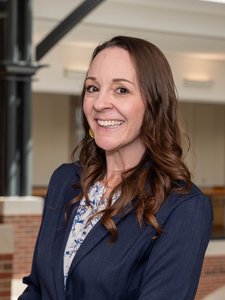
Melissa Smith, Ph.D., LICDC-CS, LPCC-S, NCC, is a counselor educator, clinical supervisor, and researcher whose work sits at the intersection of counseling and technology. She is based in Medina, Ohio, where she balances academic roles and professional service in the counseling field. Over her career, Melissa has served in diverse settings including private practice, community behavioral health, and higher education. Her prior roles include clinical and leadership positions. Melissa's professional identity is shaped by a commitment to inclusive learning environments and emerging technologies that enhance counselor education and practice. She is actively involved in state, regional, and national counseling organizations, where she contributes through leadership, conference work, and mentoring.
Areas of Expertise
Melissa's expertise spans counselor education, clinical supervision, addictions treatment, and technology enhanced learning. She has significant experience working with individuals with co-occurring disorders and has directed an accredited community behavioral health center, where she oversaw clinical services, conducted comprehensive assessments, and provided crisis response and de-escalation support. As a clinical supervisor, she has supervised clinicians working toward licensure, offering training in substance use treatment, feedback on documentation, and guidance in ethical and effective practice. Her leadership in both clinical and academic settings reflects strengths in program development, mentoring, and quality improvement. Melissa's scholarly and teaching focus centers on emerging technologies in counseling and counselor education, particularly virtual reality, artificial intelligence, immersive learning, and counselor development. She is committed to integrating these tools in ways that are ethically grounded, inclusive, and aligned with CACREP standards, while also attending to counselor identity, wellness, and formation.
Research Interests
Melissa's research centers on the integration of immersive and emerging technologies in counselor education and counseling practice. Her doctoral dissertation examined counselor educators' acceptance of immersive and interactive virtual reality as a pedagogical tool, applying the UTAUT model to understand factors that shape adoption and implementation. She has presented her work across regional and national venues, including the Association for Counselor Education and Supervision (ACES), the North Central Association for Counselor Education and Supervision, the Ohio Counseling Association, and will be presenting at the American Counseling Association Conference in the spring. Her presentations have explored themes such as virtual reality in counselor training, immersive healing in counseling, digital resilience and virtual vulnerabilities, practicum anxiety, and integrating joy and play when counseling adults. In addition to technology, Melissa's scholarly and service activities reflect ongoing interests in counselor education, clinical training, supervision, and professional formation. She serves as a CES student mentor, a community moderator and mentor for counseling doctoral students, and a leader within Chi Sigma Iota, contributing to mentoring, leadership development, and professional community building.
Education
Melissa completed her Ph.D. in Counselor Education and Supervision at Liberty University in June 2024, graduating with a 4.0 GPA. Her dissertation, titled Counselor Educators' Acceptance of Immersive and Interactive Virtual Reality as a Pedagogical Tool, applied the Unified Theory of Acceptance and Use of Technology (UTAUT) model to explore how counselor educators understand and adopt virtual reality in their teaching. During her doctoral program she was inducted into Omega Nu Lambda and Chi Sigma Iota, reflecting both academic achievement and professional engagement. She holds a Master's degree in Counseling Psychology with a specialization in Marriage and Family Therapy from Chaminade University in Honolulu, Hawaii completed in 2011, and a Bachelor's degree in Psychology from Hawaii Pacific University, completed in 2006, where she was inducted into Psi Chi International Honor Society.